“There are no concurrency certificates for either project,” St. Pete Beach City Clerk Renee Rose wrote to the Tampa Bay Guardian in response to a public records request. Rose was referring to so-called certificates of concurrency (“CoCs”) for the redevelopment of the Tradewinds and Sirata properties. Both projects, adjacent to one another, were approved by the city commission last year. However, no CoC was issued for either project before the issuance of development permits, as required under city code.
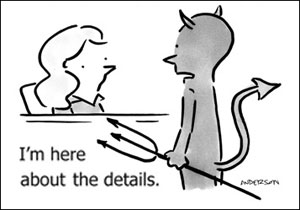
Each redevelopment is now the subject of ongoing litigation, and the information uncovered by the Guardian could prove fatal to both projects. It may turn out to be another case of the devil being in the details, and fatally so in this case.
Now for those details — “Certificate of concurrency means the document issued by the city manager certifying the concurrent availability of required public infrastructure and services” is how the city defines the term in its city code. Whether infrastructure capacity in St. Pete Beach is sufficient to support adding so much hotel room capacity was a point of contention during the approval process for both projects.
“A certificate of concurrency shall be required prior to the issuance of any development permit for a non-exempt development project”, the city’s concurrency management code says in sec. 29.4(a) [underlining and bold-facing added]. In fact, it is the first sentence under “general requirements” so it was presumably an important requirement.
Both the Tradewinds and the Sirata projects are “non-exempt development projects” under the city code, and the so-called CUPs (Conditional Use Permits) issued are the type of “development permit” that the city code defines as follows:
“Development permit means any building permit, zoning permit, subdivision approval, certification, conditional use, variance, or any other official action of local government having the effect of permitting the development of the land”
[underlining and bold-facing added].
City staff have issued development orders for both projects (see the Sirata development order and the Tradewinds development order), but these staff action indicate that they believe those orders are not the “development permits” contemplated by the city code.
However, by its plain language, the code makes clear that the city commission’s adoption of the resolutions approving the conditional use permits (CUPs) are the type of “official action of local government having the effect of permitting the development of land” that the city code itself defines as a development permit.
That a CUP itself is a development permit under the city code should come as a surprise to no one as the “Concurrency Management” section of the city code was revised rewritten and replaced in its entirety as recently as 2017.
The official resolutions by which the city commission approved the CUPs in non-unanimous votes are found on the city website (Sirata CUP approval resolution and the Tradewinds CUP approval resolution). These CUPs were approved during the “Four Flunkies” era of the St. Pete Beach City commission when an appointed (i.e. non-elected) majority approved these projects worth over a billion dollars in total.
Who will be blamed for what is now clearly an abomination of an approval process? Likely it will be the now fired former City Attorney Andrew Dickman, who orchestrated the appointment of the Four Flunkies, also in violation of the city’s own code.
See our previous articles involving Andrew Dickman, who has richly earned his “Dubious Dickman” nickname.
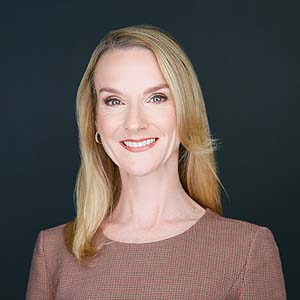
(from her LinkedIn profile)
However, the owners of the Sirata and Tradewinds properties may also have some hard questions for their attorney, who is Elise Batsel for both projects. Batsel is a shareholder in the 160-attorney Florida law firm Stearns Miller Weaver, which has offices in five Florida locations.
Batsel’s firm Stearns Miller Weaver lists “Land Development Planning Services” as one of their practice areas. It also lists “Government Affairs” as a practice area, claiming that their “Government Affairs team acts as a strategic ally for businesses seeking to navigate Florida’s intricate regulatory terrain.”
Will Batsel blame the death of the billion dollar baby on “a simple navigational error” by Dickman? Dickman was a city attorney known to be medically impaired at the time of these approvals, so the owners of Sirata and Tradewinds may think Batsel should have critically read the city code herself, just like the non-attorney unpaid staff at the Guardian did.
If the well-heeled owners take that harsher view, they may seek to hold Batsel accountable for the apparent billion dollar blunder after they paid her firm untold hundreds of thousands of dollars in attorneys fees for her to do what was promised to them: “navigate Florida’s intricate regulatory terrain.”

Time will tell, and the public might never find out what actually transpires between the parties. One thing we will find out is whether our findings make it into the two courts cases presently under way over the two development projects.
Stay tuned for more developments in this lacrimonious soap opera, where our invented word “lacrimonious” is a portmonteau of the Latin word “lacrima” for “tears” and the English word “acrimonious.”
If these St. Pete Beach CUPs truly are as dead as the Ray’s St. Pete Baseball stadium, then a tear or two might be shed by those who stood to profit from them.
Others parties, including attorneys, might shed different tears for different reasons.
As always….the Guardian opines reports and the readers decide. Please like our Facebook page to find out when we publish new stories.